Textile
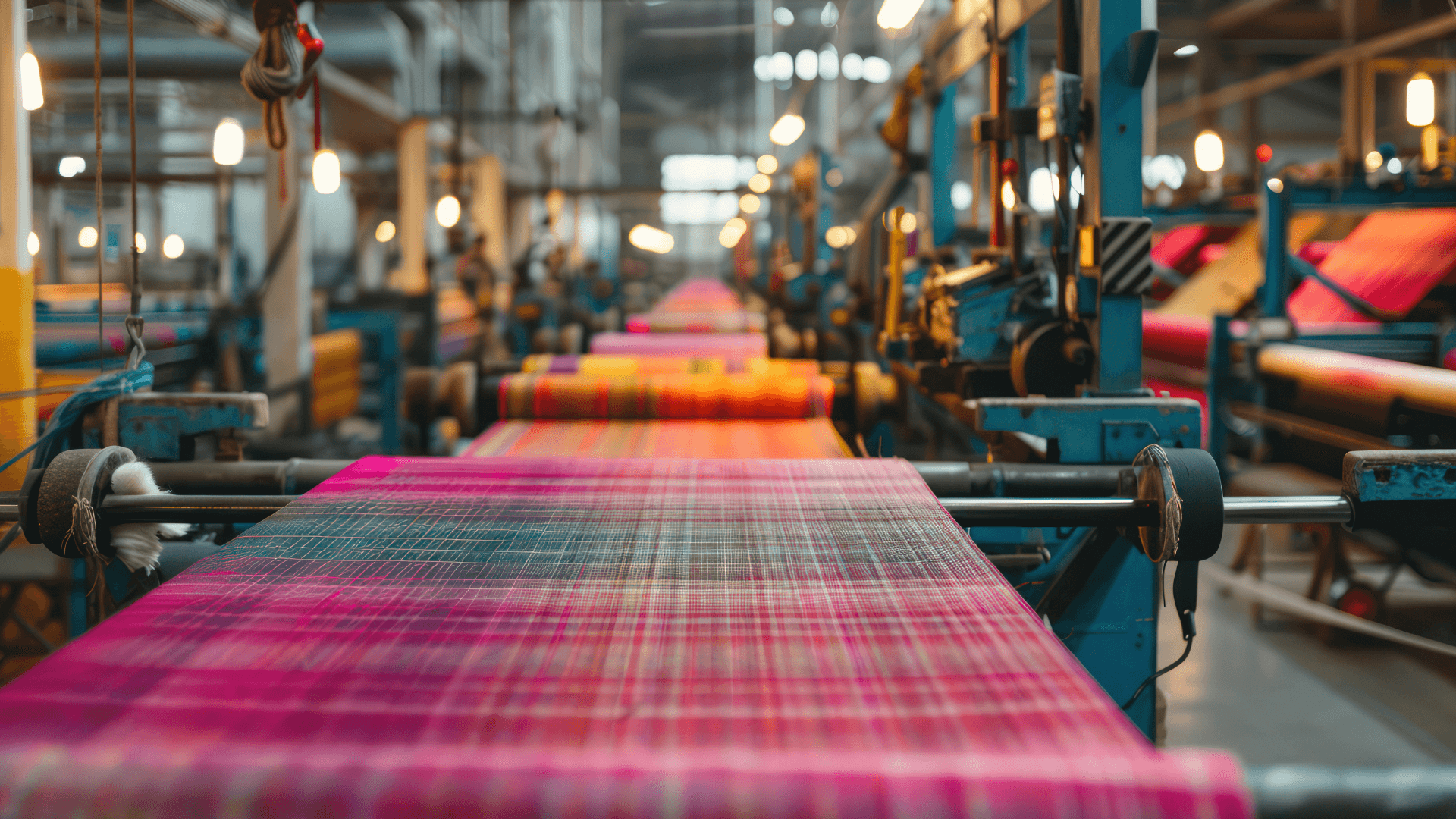
Textile wastewater is generated from washing, bleaching, dyeing, printing, and finishing processes and contains dyes, chemicals, salts, acids, alkalis, and organic residues.
These effluents have:

High Color & Dye Concentration.

High dissolve solids & Salinit.


Foaming & odor issue.


Large volume.
SED’s MVR-based LTE® technology significantly reduces waste volumes, enabling a cost-effective and sustainable Zero Liquid Discharge (ZLD) solution.
SED Smart Solution
Key Benefits
Engineered to handle diverse wastewater streams and flow capacities - direct effluent, effluent treatment plant reject, and RO reject with ease.
Resource recovery - Recovers reusable salts like sodium chloride, sodium sulphate & other by-products, converting waste into value.

Efficient heat and water recovery supports optimized energy utilization and reduced carbon footprint.
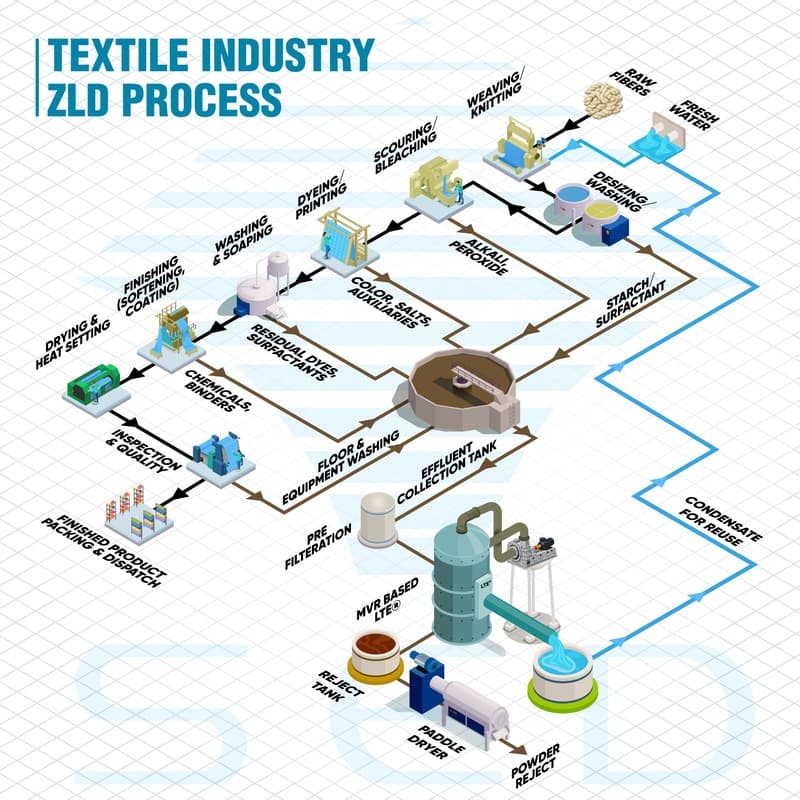
Efficient condensate recovery conserves up to 95% of freshwater resources.

Single step solution – No pretreatment or chemical dosing saves land, capital cost & operation cost..