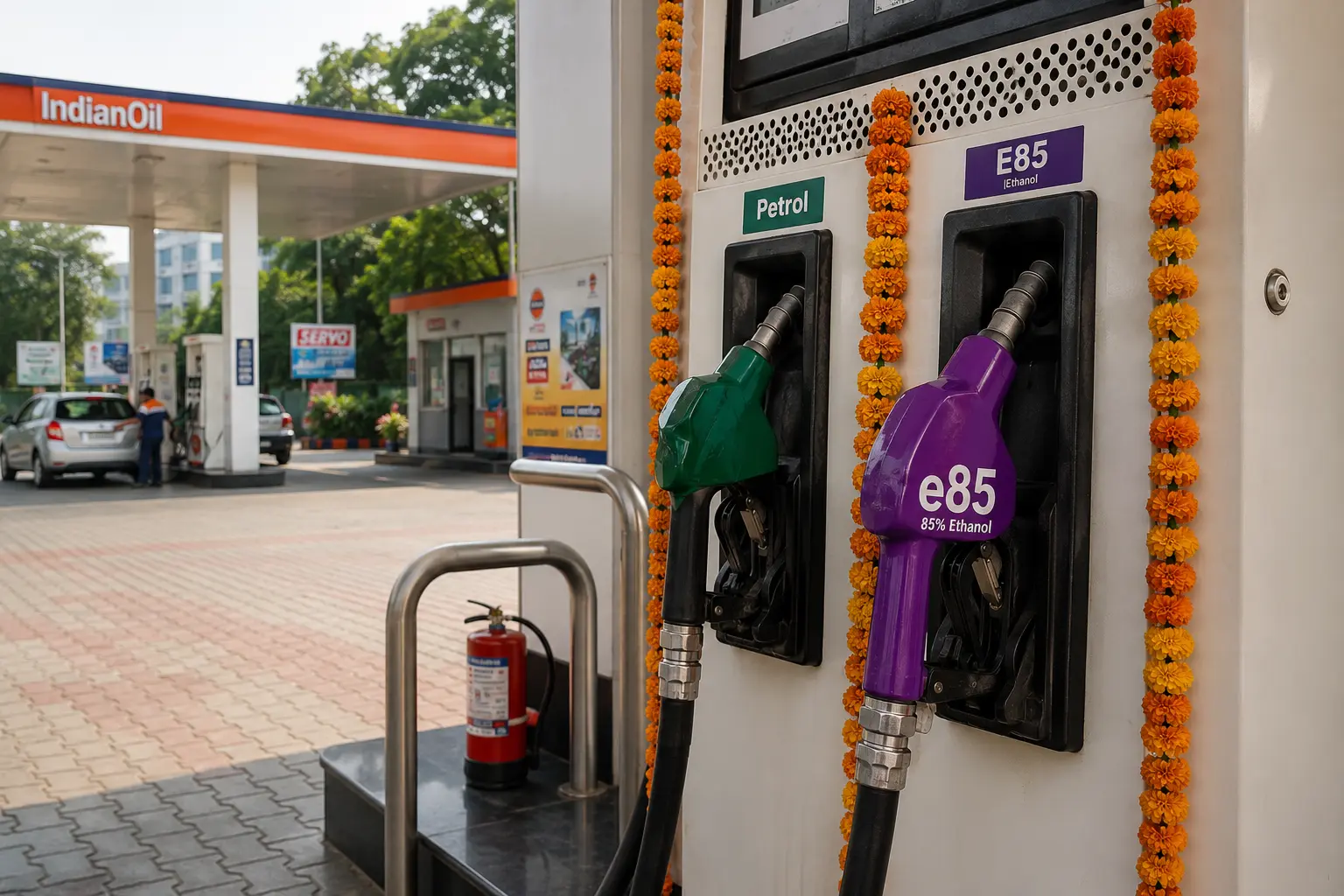
The recent launch of E85 Fuel in India could redefine far more than the country's transportation sector. It has the potential to reshape ethanol demand, influence future investments in production infrastructure, and accelerate the evolution of India's biofuel industry. As the nation prepares for higher ethanol blends, one question becomes increasingly important: Is India's ethanol production ecosystem ready for what comes next?
India's launch of E85 isn't just another fuel announcement; it's a shift in strategy. After E10 and E20, ethanol is stepping out of its role as a blending agent and into a starring one: a strategic fuel capable of reshaping transportation, energy security, and domestic fuel demand. E85 doesn't mark another milestone. It marks the start of a new chapter.
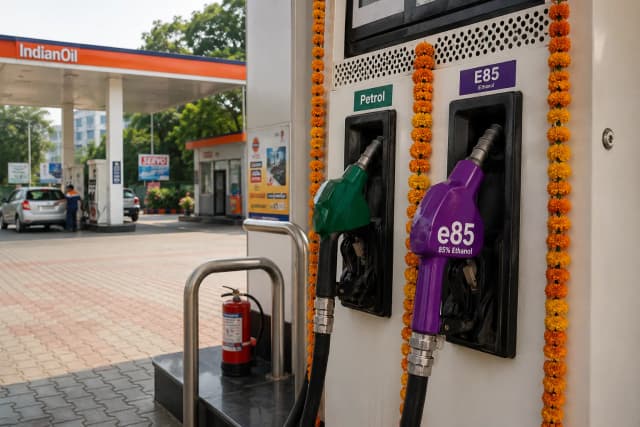
E85 is a high ethanol blend, up to 85% ethanol and 15% gasoline, built for flex fuel vehicles (FFVs), which read the blend automatically through onboard sensors and adjust combustion accordingly.
But E85 is more than a fuel blend. It's the foundation of a mobility model where ethanol becomes a primary fuel, not a supplement. For India, FFVs are the mechanism that makes that shift possible.
E20 proved ethanol blending could scale. E85 raises the stakes, demanding a full flex fuel ecosystem of compatible vehicles, fuel infrastructure, and reliable ethanol supply. It's not just the next blend; it's where India's ethanol ambitions meet the limits of its infrastructure.
E85 fits into India's broader push to cut crude oil dependence, strengthen energy security, and support cleaner mobility. But its real significance lies in execution. If India can successfully scale up E85, it will strengthen fuel diversification and create a stronger role for domestic ethanol in the energy mix. Its success will depend on how effectively policy, industry, and technology evolve together.
E85 has moved beyond the proposal stage, with its commercial launch on June 5, 2026, at 48 retail outlets across Delhi-NCR, Mumbai, Pune, and Nagpur. Recognised by the Bureau of Indian Standards as a monofuel for flex-fuel vehicles, it now has a formal regulatory foundation. However, nationwide adoption remains limited.
The government plans to expand to 500 outlets by December 2026 and 5,000 by the end of 2027. While E85-compatible two-wheelers are already available, passenger FFVs remain scarce. Expanding fuel infrastructure and vehicle availability together will be critical for large-scale adoption.
India introduced E85 not as a routine fuel upgrade, but as a strategic response to rising fuel demand, crude import dependence, and the need for cleaner mobility. It gives the country a way to reduce oil exposure, strengthen energy security, and expand the role of domestic ethanol in transport.
India’s heavy reliance on imported crude makes it vulnerable to price shocks and supply disruptions. E85 helps reduce that exposure by replacing a larger share of petrol with domestically produced ethanol, easing pressure on foreign exchange reserves.
E85 supports a more secure fuel system by increasing the use of homegrown ethanol from sugarcane, maize, grains, and other approved feedstocks. That makes transport fuel less dependent on imported fossil fuels.
E85 offers an immediate way to lower the carbon intensity of road transport. It does not replace every clean mobility solution, but it adds a practical decarbonization pathway India can deploy now.
E85 fits directly into India’s broader biofuel strategy. By pushing higher ethanol use, it strengthens the case for flex-fuel mobility and a more diversified transport fuel mix. This transition also increases the importance of scalable and resource-efficient ethanol production technologies.
Higher ethanol demand also creates new opportunities for farmers, distilleries, and agro-processors. In that sense, E85 is not just a fuel policy; it is an economic signal for the wider biofuel ecosystem.
India's E85 shift could turn ethanol from a blending ingredient into a strategic fuel, and that changes everything. E85 multiplies demand fast, forcing the industry to produce more ethanol, more reliably, than E20 ever required. Sugarcane alone won't cover it; maize, damaged grains, surplus rice, and 2G biomass must all enter the mix.
But volume without continuity fails. E85 demands year-round supply, stronger storage, smarter logistics, and plants that run efficiently across feedstocks. The next decade's winners will be producers who scale without wasting water, steam, energy, or time.
India's ethanol industry has built a solid foundation, expanding distillery capacity, supportive policies, and diversified feedstocks like sugarcane, maize, and damaged grains. But E85 demands more. Capacity constraints, regional imbalances, weak logistics, and seasonal feedstock swings threaten future supply. Growth now hinges on expanding capacity, modernizing distilleries, strengthening logistics, and boosting efficiency, building a reliable ethanol supply for India's E85 future.
For consumers, the key question is whether E85 costs less to drive. While E85 is priced nearly ₹20 per litre below petrol, ethanol contains about 30% less energy, reducing fuel economy in conventional flex-fuel vehicles. As a result, cost per kilometre, not pump price, determines savings. E85 remains economical only if the price gap is wide enough to offset lower mileage, with proposed GST reductions potentially improving its value. Hybrid flex-fuel vehicles can partly overcome this efficiency loss, though they are not yet widely available in India. Ultimately, E85's economic success depends on sustained pricing advantages supported by stable supply and policy.
India’s move toward E85 will require more than added ethanol capacity; it will require more efficient ethanol plants. As demand grows, producers will need technologies that reduce steam use, improve recovery, lower operating costs, and deliver fuel-grade ethanol consistently. That is where modern process engineering becomes critical.
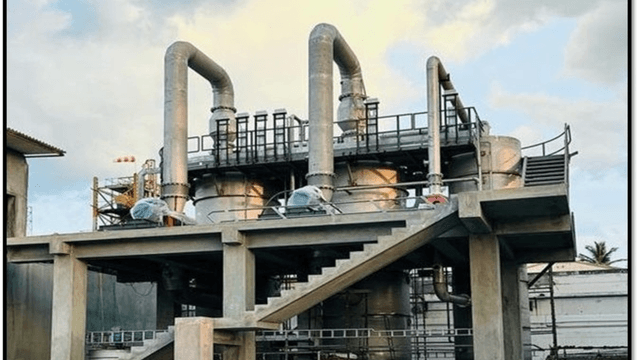
Evaporation is ethanol production's biggest energy drain, and conventional systems only get costlier as output rises. SED's patented LTE® (Low Temperature Evaporation) recovers and reuses thermal energy within the process, cutting steam use so production can scale without costs following.
As India moves toward higher blends like E85, purity is non-negotiable—small variations can break fuel performance and compliance. Advanced distillation with molecular sieve dehydration delivers fuel-grade consistency, higher recovery, and lower energy losses: better yield, better quality, stronger performance.
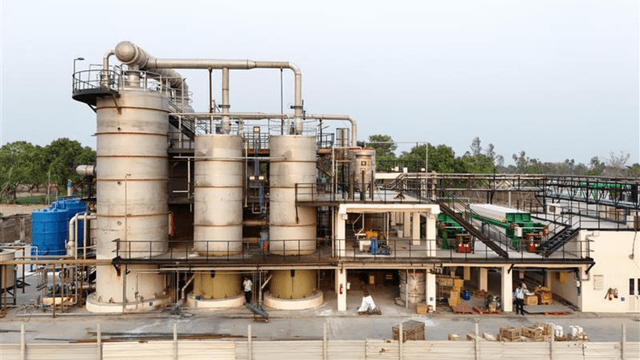
Isolated systems bleed efficiency. Integrating evaporation, distillation, dehydration, heat recovery, and utilities into one operation raises thermal efficiency and throughput—without expanding the footprint.
Manual operation can't match the control higher volumes demand—the gap shows up as downtime and lost output. Automation and predictive monitoring keep performance stable and quality consistent. It's no longer optional; it's the competitive edge.
The winners in India's ethanol industry won't be the biggest plants—they'll be the smartest. Lower steam use, better water management, higher recovery: this is what separates the next generation from the last. SED's LTE® and integrated process design aren't building bigger plants. They're building smarter, cleaner, more cost-efficient ones.
Launching E85 is a bold step, but policy alone is not enough. Success depends on a coordinated push across agriculture, manufacturing, infrastructure, and the auto sector. The real challenge is not introducing E85; it is building an ecosystem that can sustain it.
Brazil and the United States show that E85 success is never just about fuel—it is about industrial readiness. High-ethanol adoption depends on policy, flex-fuel vehicles, feedstock security, production scale, and efficient processing working together. India’s path will differ, but the message is clear: blending targets mean little without manufacturing capacity to back them. The real challenge is not copying global models, but building an ethanol ecosystem that can scale fast, conserve resources, and withstand long-term demand at national industrial scale.
India's E85 ambition marks the beginning of a more mature ethanol economy, one where competitiveness will depend as much on manufacturing excellence as on production capacity.
E85 is not the destination—it is the beginning. India's long-term leadership will depend on the choices it makes today in technology, efficiency, and manufacturing excellence.
What is E85 fuel and how is it different from E20?
E85 fuel is a high-ethanol blend made up of 85% ethanol and 15% petrol. It is designed for flex-fuel vehicles that can automatically adjust to different fuel blends without manual intervention.
Why was E85 fuel introduced in India?
The launch of E85 supports lower crude oil dependence, stronger energy security, reduced transport emissions, and greater use of domestically produced biofuels.
How will E85 fuel affect ethanol production in India?
Wider adoption of E85 will significantly increase ethanol demand, pushing producers to expand capacity, improve efficiency, and invest in advanced process technologies.
Is India's ethanol industry ready for large-scale E85 adoption?
The industry has made progress, but large-scale E85 adoption will require more capacity, stronger feedstock availability, and highly efficient production systems.
Will E85 replace E20 in India? E85 will move biofuels beyond blending targets and into a larger, technology-driven industry shaped by investment, scale, and long-term growth.